The self-service kiosk market is expanding rapidly across multiple sectors including retail, hospitality, healthcare and government services as demonstrated by the emergence of kiosks in an ever-wider range of locations. Offering the potential for improved operational efficiencies, an ability to drive down costs and enhanced customer satisfaction, the trend towards the greater use of self-service kiosks shows no sign of abating.
As for consumers, self-service technology provides convenience, speed of service and control over the buying experience. In particular, the rise in online ordering across multiple channels is resulting in greater demand for self-service kiosks for retail applications such as endless aisle, self-checkout and store returns. In hospitality, we have seen their role expand to the collection and delivery of food and beverages acting as a cost-effective solution for restaurants and a convenient option for customers.
With a far more informed and tech-savvy customer, retail and hospitality are having to provide a seamless shopping experience across a widening range of connected channels and social platforms. Point of sale has to successfully cater to the needs of a customer who is looking to use a variety of channels and is seeking not simply a product, solution or service but a highly engaging experience.
Given their inherent versatility alongside a desire by retailers to reduce their cost base and boost revenue, kiosks have for many businesses become part of an overall omnichannel customer engagement strategy. Users can benefit from reduced waiting times while retailers have the potential to offer a highly personalized customer service, for example with add-on purchases via AI-driven upselling prompts and by redeploying staff to enhance customer service elsewhere in the store.
In line with sustainability trends, kiosks have an increasingly important role to play in reverse vending as many countries introduce a deposit return scheme (DRS) to encourage the recycling of single use beverage containers in return for a monetary or non-monetary reward. Another sector is parcel delivery and collection. As consumer delivery preferences shift towards a demand for greater convenience and flexibility, the growing use of parcel lockers can boost footfall and improve customer retention. Moreover, by consolidating parcel stops and limiting delivery traffic, environmental impact is reduced.
Key considerations when designing a kiosk
Clearly there are costs associated with kiosk installation, infrastructure conversions and maintenance which can represent financial hurdles, especially for small and medium-sized organisations. As a result, it is essential to consider the design and components of the kiosk in order to maximise a return on investment and benefit from reliable hardware that can withstand constant usage.
There are a number of factors to take into consideration when designing a kiosk. Given the range of components required encompassing hardware, software, screen, payment terminal and operating system as well as the kiosk housing itself, established partnerships with different suppliers ensure successful design and installation.
Further considerations include where the kiosk is to be located and customers who will be using the kiosk in order to allow for ease of access and use, as seen in recent legislation ensuring accessibility for users with disabilities via features such as adjustable heights, text to speech, tactile keypads etc. Moreover, businesses have to assess how staff can be effectively redeployed.
Printing solutions for optimal performance
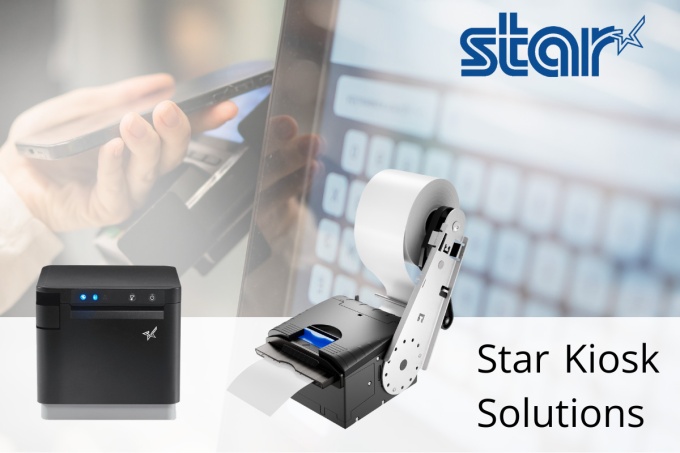
Consideration of hardware components should be made at the beginning of the design process. Designing a receipt, ticket or label printer to fit perfectly into a kiosk during the initial design stage not only maximises space but ensures optimal performance, particularly with regard to paper path. A high-quality printer is pivotal to the reliable operation of the kiosk to minimise downtime and servicing costs, whether this is an open frame mechanism or a ready-to-install packaged printer.
Packaged printers are ideal for self-service kiosks where staff are physically present to replenish print media. Most kiosk printers have a standard size paper holder and a large capacity option. If frequent paper roll changes are required this can be time consuming, so it is important to select a printer that has the correct paper roll capacity for the application. Furthermore, in a busy retail or hospitality environment, the front-operating packaged printer with drop-in paper loading provides a compact printing solution that facilitates easy paper roll changes.
Printers can operate on a cut and drop basis or incorporate a presenter or bezel depending on the application. The presenter prevents paper jams caused by the paper being taken before printing is complete, while the bezel is positioned between the kiosk slot and the printer in order to provide an accurate exit path for the paper. The printer should also be equipped with sensors and paper status alerts to indicate when a kiosk is low on paper, has a paper jam or is offline. These should ideally be visible centrally so the status of an entire estate of printers can be viewed to keep operations moving efficiently.
Selecting a printer with a variety of interface options, including innovative Cloud technologies, enhances the kiosk’s printing capability. This is important as the type of interface and the ports the printer has will dictate how the printer communicates. For applications such as Click & Collect in-store orders and returns, a printer that is equipped for remote printing of receipts and tickets directly from a web server to connected printers located anywhere is a key requirement. Moreover, with remote functionality the printer can be managed from any location.
Reliable connectivity is essential in a self-service kiosk so integrating a printer with a built-in hub can provide direct communication between the tablet OS and printer, allowing for the tablet to be charged and the printer attached peripherals such as Barcode reader, RFID reader, keypad etc to be controlled.
As kiosk development is time consuming it is important to select a printer that offers a futureproof solution. A comprehensive SDK and driver suite is crucial for developers to simply integrate the printing solution, particularly when working with multiple printers or a large network of kiosks. Moreover, an experienced technical team to support and advise regarding both hardware choice and software development allows for ease of integration.
Star’s technical expertise
With over thirty years’ experience and expertise in the kiosk industry and an unrivalled reputation for reliability, Star Micronics is a leading installer of packaged and modular specialist kiosk printing solutions with an extensive portfolio of industry-leading products. Providing specialist kiosk products for some of the world’s most prominent retail, hospitality, leisure and entertainment chains as well as large-scale lottery and ticketing applications, Star has developed long-standing partnerships with leading kiosk manufacturers. Supporting iOS / Android / Windows / ChromeOS tablet software partners with kiosk integrations, Star also offers StarIO.Online, a Cloud based service for remote device management.
Star’s technical expertise and support ensures developers can integrate Star printers with a consistent experience. Its sophisticated drivers support industry standards from all major desktop and tablet operating systems, while Star prides itself on the quality of its SDKs, Source Code and Technical Manuals available to developers.