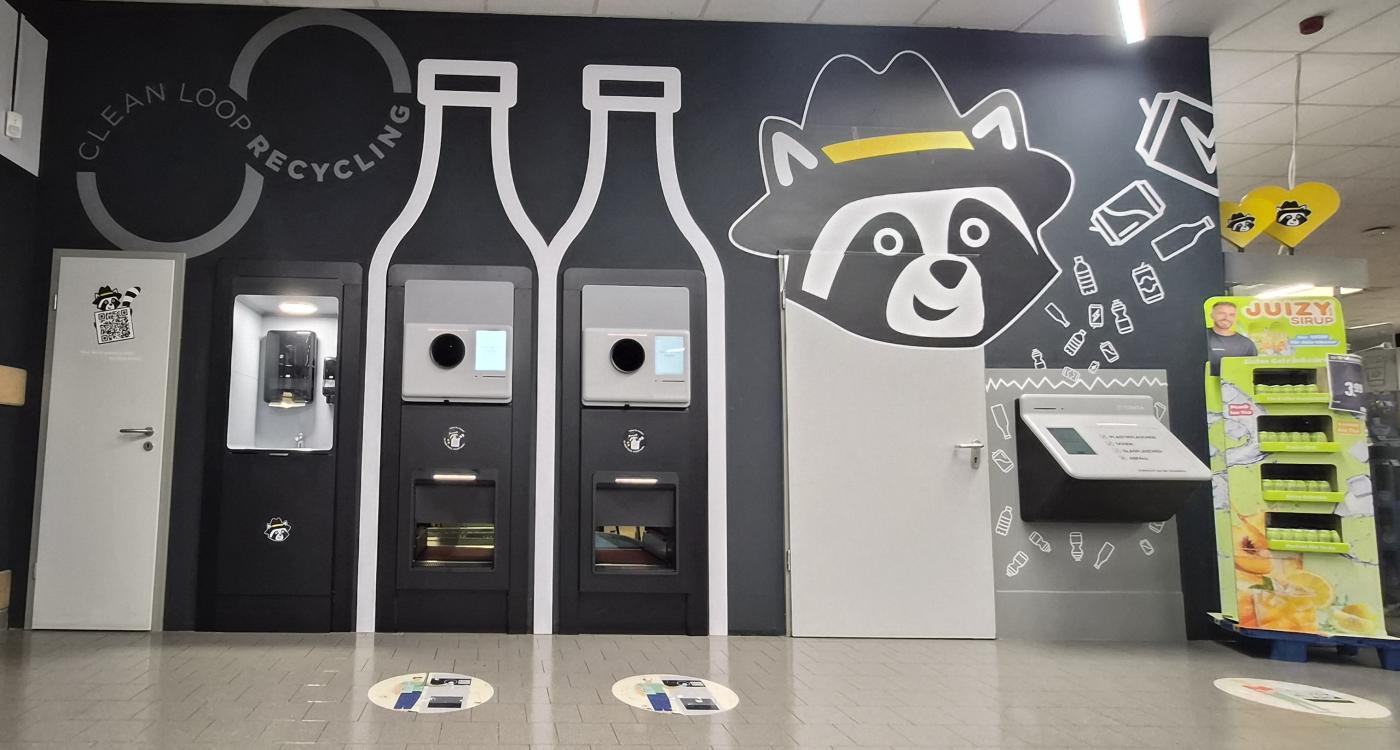
"Empties have to be sexy." When Josef Mühlenbein, owner of EDEKA Mühlenbein - a grocery store in Kassel, Germany talks about deposit returns, it sounds pragmatic and pointed at the same time.
For 20 years, harmonised return of deposit-bearing beverage packaging across retailer boundaries has been a daily reality in Germany – internationally, the DPG system is considered a model. With 16 of 27 EU member states now operating a deposit return scheme and more launching every year, the German experience offers lessons – and limits.
The supplier's perspective: Thomas Løstegård in interview
How requirements for return systems have changed over two decades and where the technology is headed – Thomas Løstegård puts it into context. The Managing Director of TOMRA Collection Germany has been involved with the DPG system as a supplier for many years.
What requirements do retailers place on return systems today – and which have changed the most since 2006?
Returns are no longer just a mandatory process today – they're part of the shopping experience. Retailers expect systems that are convenient for customers, reduce waiting times and operate efficiently at the same time. The decisive factors are high availability, strong throughput, intuitive operation, good use of space and easing the workload on staff. What's evaluated today is no longer just the machine, but the entire return process – from the frontend through the backroom to service, spare parts availability and long-term operational reliability.
Sensors, multi-feed, background sorting: which technological development has shaped everyday store life the most – and where does it specifically ease the workload for staff?
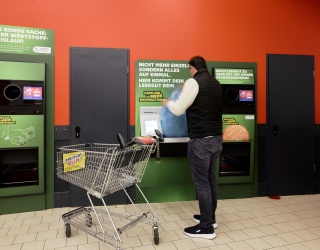
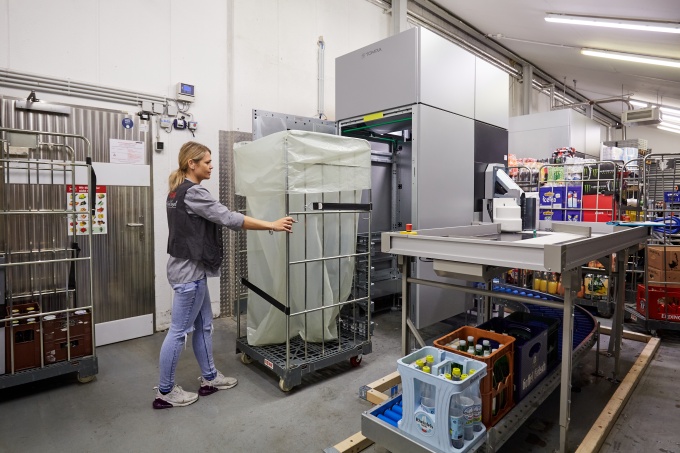
One of the biggest levers lies in the backroom. Solutions like TOMRA RollPac show how return logistics can ease the workload on staff: containers are collected and compacted efficiently, existing roll container structures are used, and physically demanding work steps are reduced. Multi-feed systems like the TOMRA R2 additionally focus on the customer experience, because larger quantities can be returned in a single transaction. The strongest impact comes from the interplay: reliable recognition at the frontend and efficient sorting and compacting processes in the background.
With the EU Packaging and Packaging Waste Regulation, recycling rates are set to rise. What role does the DPG system play in this development – and where does it need to evolve?
Developments at EU level underline how important high-performing, secure and trustworthy deposit systems are. The DPG system has proven itself over 20 years: it captures packaging in a targeted way and feeds materials back into high-quality recycling streams. Going forward, the task is to build on these strengths – with high convenience, clear governance, system integrity, digital connectivity and efficient processes that grow with rising demands on material quality, process speed and circularity.
New deposit systems are currently being set up in several European countries. What can they learn from the German model – and where should they take their own path?
Valuable lessons can be drawn from the German DPG system: clear governance, alignment of all stakeholders on a shared goal, and a convenient, trustworthy return infrastructure. At the same time, no country should copy the German model one to one. Retail structures, logistics, geography, regulation and consumer habits differ. What can be transferred above all are the basic principles of successful systems: simple use, clear roles, strong retail integration, reliable infrastructure and long-term system integrity.
Germany in context: a maturing European landscape
When Germany introduced its harmonised return scheme in 2006, only a handful of countries – primarily in the Nordic region – had similar systems in place. Two decades on, the landscape looks fundamentally different.
As of September 2025, 16 of the 27 EU member states operate a deposit return scheme (DRS), four more have adopted the necessary legislation and are preparing to launch, and seven still have no system in place. Return rates in established schemes are remarkable: Germany exceeds 98 per cent, Norway reaches 92 per cent, and Lithuania – which only introduced its system in 2016 – has surpassed 90 per cent.
Several new schemes have launched in the past three years:
- Romania (November 2023) – reported a 2025 collection rate of 83 per cent, with more than 5.2 billion containers returned through the DRS system
- Ireland (February 2024) – achieved a 73 per cent return rate within seven months of launch
- Austria (1 January 2025) – targeting a 90 per cent return rate by 2027, with a refundable deposit of €0.25 per container Handelsverband Deutschland
- Poland (October 2025) – notably operating with multiple licensed operators, whereas most countries rely on a single one
More are in preparation: Portugal is set to launch in 2026, Greece is preparing for the same timeframe, and the United Kingdom has scheduled its scheme for October 2027 across England, Wales, Scotland and Northern Ireland.
The driver behind this acceleration is European policy: under the EU Packaging and Packaging Waste Regulation (PPWR), at least 90 per cent of all single-use plastic bottles and metal cans must be collected by 2029. For most member states without comparable collection infrastructure, a deposit return scheme has become the most viable route to that target.
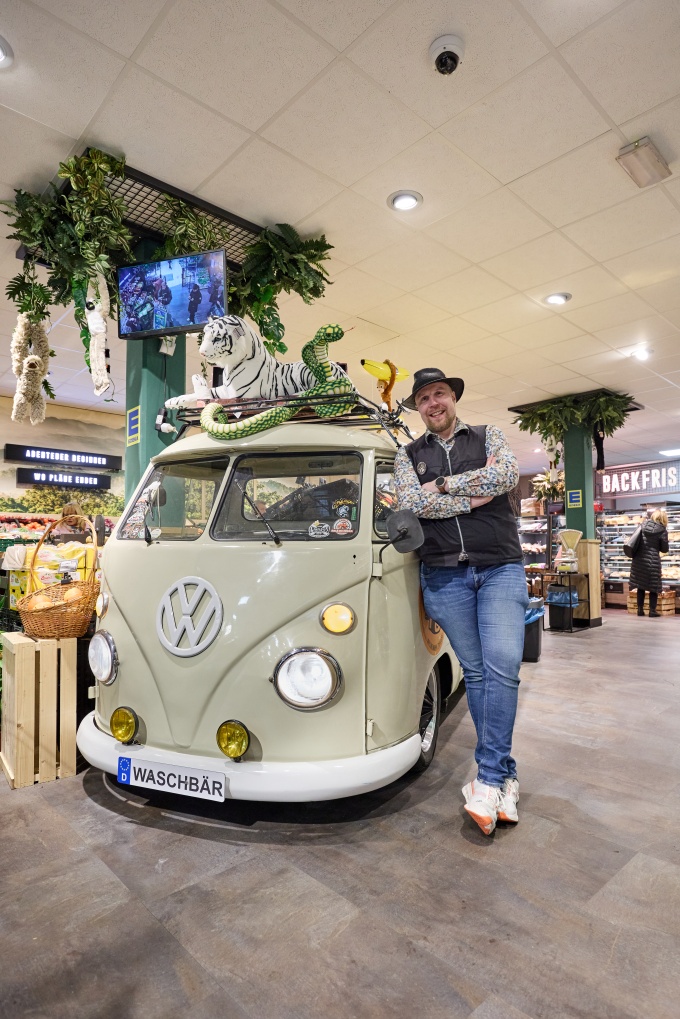
Voice from the shop floor: Josef Mühlenbein
How the DPG system feels in the everyday life of a grocery store is described by Josef Mühlenbein, owner of grocery store EDEKA Mühlenbein in Kassel, germany.
"Empties have to be sexy."
Josef Mühlenbein sums up the central challenge of deposit returns in a single line: "Nobody wants to deal with greasy, slimy, sticky, dirty containers." He sees the 2006 harmonisation as an important step – it replaced isolated solutions and was "a good impulse for everyone who has understood the topic of empties", both for customer loyalty and for sales. One area that remains a challenge for him is reusables: many containers have not yet been harmonised, and individual bottles make sorting time-consuming for staff. In addition, he notes that reusables are shrinking, while single-use continues to grow.
"Impossible without the technology."
That's how Mühlenbein describes today's store reality. In 2006, it was still common to accept single-use and deposit containers by hand – unthinkable today. Highly efficient, audit-proof, fail-safe and in a small footprint: these are the requirements, both at the frontend and in the backend. In his store, this works noticeably well – he has no complaints about breakdowns, long waiting times or acceptance issues.
"More sexiness for the staff."
His wish for the next ten years is clearly stated: further harmonisation in the reusable segment and more robotics in the backend that take heavy and dirty work off the staff. "As sexy as we have made it for the customer, I'd like to see even more sexiness for the staff."
Two decades on – and a model in transition
Two decades after its introduction, Germany's DPG system is solidly anchored in the market – and increasingly serves as a reference point for other European countries building their own schemes. At the same time, the voices from supplier and shop floor outline open challenges: pressure from the EU Packaging and Packaging Waste Regulation calls for adjustments without dismantling what works. The biggest technical levers lie in the backroom – with the staff who still handle the heaviest work steps today. And on the reusable side: according to Germany's Federal Environment Agency, the share of beverages sold in reusable packaging stood at 34.3 per cent in 2023 – well below the legal target of 70 per cent.
For new schemes across Europe, the German experience offers two clear lessons: the core principles – simple use, retail integration, reliable infrastructure – are transferable. The specific design is not. As Thomas Løstegård puts it, no country should copy the German model one to one.