
Sustainability is no longer a nice extra, but is increasingly recognized by retailers as an indispensable factor for success. Today's customers expect more than just attractive goods: they want to know how and with what they are made—and what that means for the environment and society.
Against the backdrop of rising energy prices and growing resilience requirements, stores must be designed not only to be aesthetically pleasing, but also flexible, durable, and environmentally friendly. This means making conscious choices about materials, relying on modular systems, and making supply chains transparent.
Trends in sustainable materials in store design
- Why they are popular:
Sustainable materials combine ecological responsibility with functional versatility and create a positive customer experience. They are based on renewable, recycled, or recyclable raw materials that help reduce the carbon footprint and conserve resources.
- Areas of application:
They are particularly suitable for interior design, wall cladding, floor design, and furniture construction. Examples include:
- Interior design & furnishings: FSC- or PEFC-certified wood is used for shelves, counters, wall paneling, and store fixtures. These materials are sturdy, aesthetically pleasing, and exude natural quality.
- Flooring: Recycled materials such as denim flooring made from jeans scraps or recycled vinyl flooring are robust and sustainable—ideal for high-traffic shopping areas.
- Wall and interior design: Bio-based wallpaper made from alpine hay, moss, or flowers creates a pleasant indoor climate and an authentic natural experience.
- Displays an decoration: Upcycled plastics enable sustainable yet creative product staging and presentation areas.
- Packaging and transportation: Sustainable materials complement store planning with environmentally friendly packaging and supply chains to make the entire customer journey greener.
Globetrotter – A great example of sustainability in store design
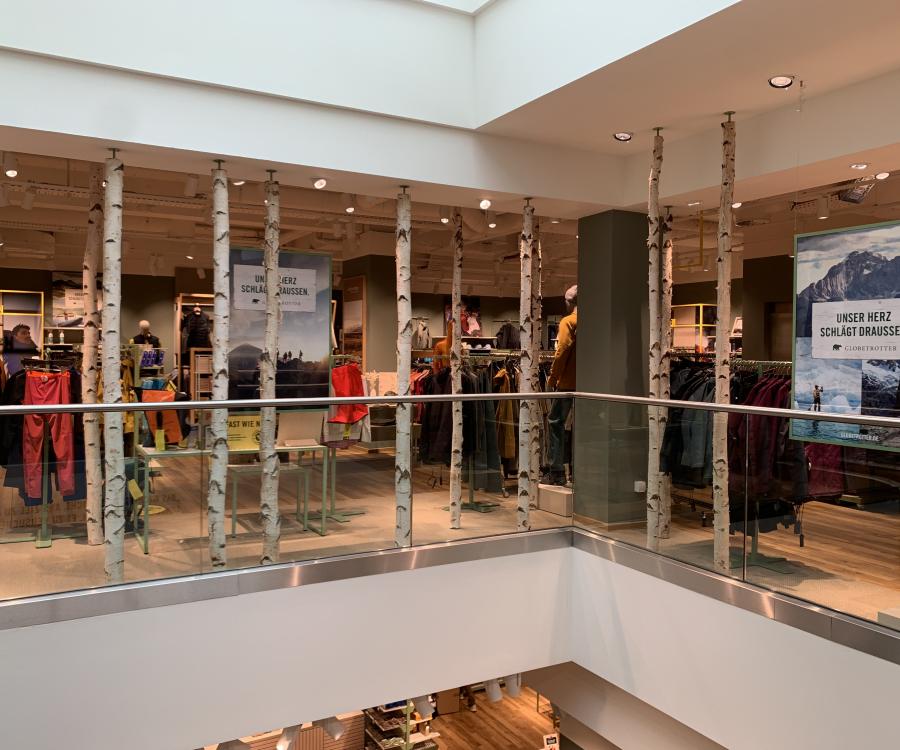
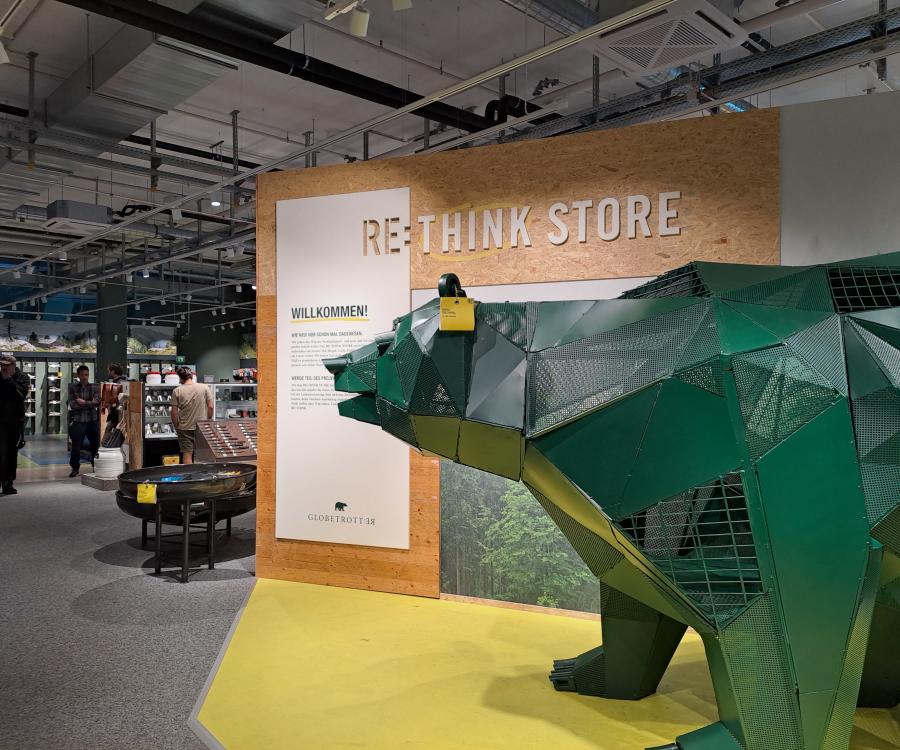

The following are becoming increasingly popular in shopfitting:
- Materials with Cradle to Cradle certification that guarantee a closed material cycle.
- Innovative modular systems with climate-neutral components that combine flexibility and sustainability.
- The use of bio-based adhesives and binders, for example in chipboard and wallpaper, to further reduce the ecological footprint.
- Limitations and challenges:
In heavily used areas with high traffic (e.g., entrance areas) or special hygiene requirements (e.g., fresh food areas in grocery stores), sustainable materials sometimes reach their limits. These areas often require particularly robust and easy-to-clean surfaces, for which sustainable alternatives are still in development or are more expensive.
Your tips for sustainable store fitting: How to make it work
- Think sustainability from the outset. Plane deinen Store so, dass Nachhaltigkeit von Beginn an ein zentraler Bestandteil ist. Wähle Materialien aus, die langlebig, modular und recycelbar sind. Denke an deine Strategie für morgen.
- Understand standards and certifications.For truly sustainable store design, rely on recognised, independent labels. The most relevant include DGNB for sustainable buildings and interiors (especially in Europe), FSC and PEFC for responsibly sourced wood products, Cradle to Cradle Certified for circular and health-safe materials, and the German Blue Angel ecolabel for particularly environmentally friendly products.
- Don't just rely on marketing promises, but look for certified labels – that's how you achieve true sustainability.
- Check supply chains and material origins - Make sure that all materials have clear proof of origin. Ask your suppliers specifically about their carbon footprints and environmental performance.
- Focus on flexibility and modularity: Use modular systems that allow you to make quick adjustments and reuse components. This reduces waste and lowers your costs in the long term when you want to adjust your product range or remodel your store.
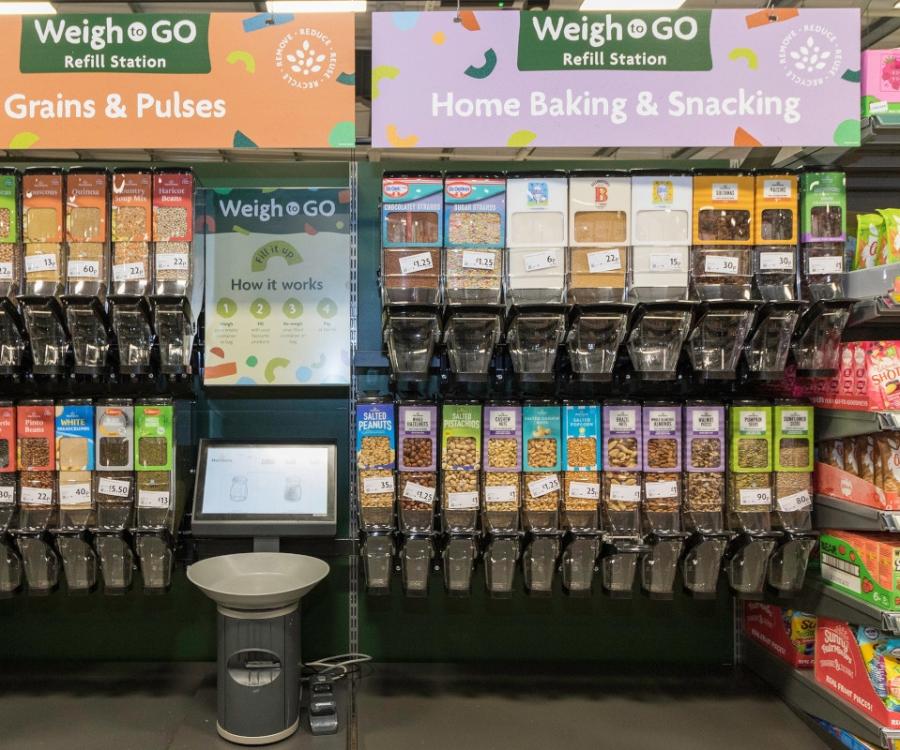
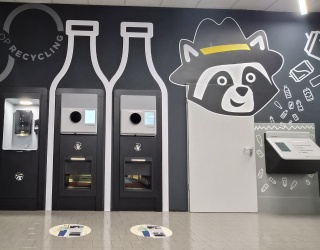
- Make sustainability visible and tangible. Show your customers exactly what sustainable measures you are implementing: signage, information stations, or digital displays that explain materials, recycling, or energy savings create proximity and trust.
- Calculate realistically and plan smartly! Determine the economic viability of sustainable investments early on, for example through life cycle analyses or CO₂ footprint assessments. Sustainable concepts often pay off in the long term through durability and better customer loyalty.